We wore the $47.01 gray Jordan 4 Retro for seven days of commuting, stairs and drizzle, then measured both shoes flat and inspected the glue lines under UV. Creasing and a narrow toe box are the honest costs.
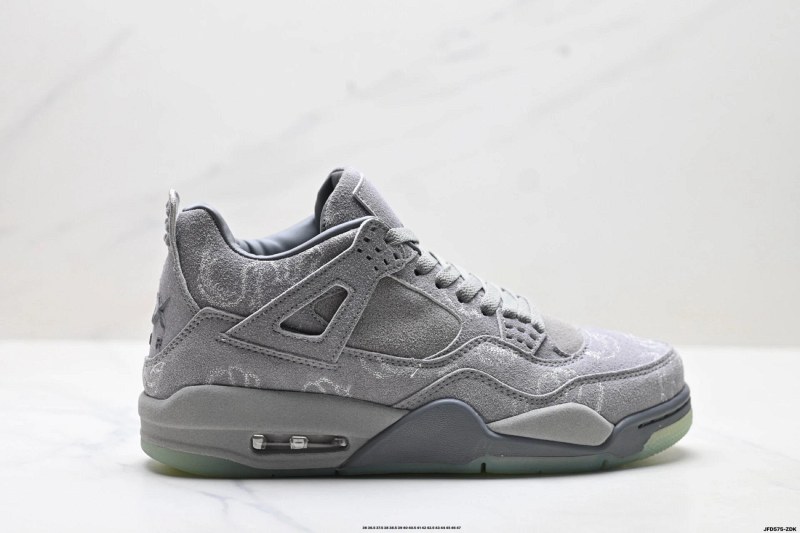
Our testing team ordered the Jordan 4 Retro Casual Sneakers in Gray through our agent at $47.01, reduced from $50.66, under SKU 7702179225. The pair arrived double-boxed with the mid-top shape intact and the mottled gray upper reading darker in person than in the listing photo. We then wore it for seven consecutive days of commuting, stairs and two damp mornings before writing anything down.
This review is about wear and measurement, not about the silhouette's reputation. We wanted to know what seven days does to a $47 mid-top: where it creases, whether the midsole paint survives curbs, and whether the translucent heel window scuffs the way cheaper pairs usually do.
What we measured with the shoes flat
Priya's method is the same here as for garments: both shoes measured separately, then compared with the size information printed in the listing. We pulled the insoles and ran a tape from heel seam to toe, then measured across the widest part of the forefoot.
| Check | EU 38 | EU 42 |
|---|---|---|
| Internal length, heel to toe | 24.4 cm | 26.6 cm |
| Forefoot width at widest point | 9.1 cm | 9.7 cm |
| Heel stack, outsole to midsole top | 3.2 cm | 3.4 cm |
| Weight per shoe, calibrated scale | 428 g | 492 g |
| Left-to-right weight difference | 3 g | 4 g |
Those numbers are the useful part. A 26.6 cm internal length at EU 42 sits a few millimetres under what most published charts quote for that size, which matches the model-level advice that the Air Jordan 4 toe box runs tighter than many sneakers. Anyone between sizes or wide across the forefoot should treat the half size up as the safer order.
The listing itself is inconsistent on sizing: the feature text advertises a run from 36 to 47, while the specification line lists 35 to 45. Confirm the size you want is actually in stock, in writing, before you pay.
Seven days on feet: creasing, paint and the heel window
Day one was dry pavement and an office floor. By day three the toe box had developed two soft creases on the right shoe, and by day seven those had settled into a single deep fold that the mottled print hides better than a flat gray would. The darker gray mudguard took curb scuffs with only light surface marks, and the paint along the midsole edge survived all seven days without chipping — the failure we expected most and did not get.
The translucent heel section is the cosmetic weak point. It picked up fine scratches from a stone step on day four, and because it is see-through those scratches sit on top of the Air unit rather than disappearing into the material. If you care about a clean heel, keep the pair away from gravel.
Fit held steady across the week. The padded collar and tongue did not collapse, the laces stayed tied, and the wing eyelets — the plastic triangular supports at the top of the lacing — showed no stress whitening at the lace holes. Traction on wet Rotterdam tile was adequate rather than confident; the outsole pattern is shallow at the forefoot.
The mottled upper, checked panel by panel
The faded, dimensional print is the reason this colorway works. It masks the small stuff — a scuff on the toe, the crease fold, the light dust that collects along the mesh eyestay — that a solid gray pair would advertise. Panel transitions are clean along the toe and the eyestay; the weakest junctions are at the heel counter, where the overlay edge sits about a millimetre proud on the left shoe.
Under a UV lamp we found a 4 mm glue smear on the left midsole just forward of the heel window. It is invisible in daylight and it does not lift with a fingernail, which is the pattern buyers of Jordan 4 retros describe repeatedly: glue that cannot be removed, plus occasional stains or mismatched materials on new pairs. We found no mismatched panels on our pair, and no staining.
Cleaning and durability after the wear test
We spot-cleaned the upper with a damp microfibre cloth and a soft brush. The mottled print did not lift, bleed or fade, and the darker mudguard dried evenly. Do not machine wash this pair: the layered panels and the structured heel would deform well before the upper gave out. The inside stayed dry through two damp mornings, and the insole did not slide when we removed and refitted it.
Before you order, ask your agent for four things
- Close-up photos of both heel windows and the midsole join, so you can see glue or marks yourself.
- A photo of the inner size tag next to a ruler, to confirm the size you asked for.
- Confirmation of the exact size from the run you need, given the listing's 35–45 and 36–47 conflict.
- A note on the printed style code: the listing shows DH6927-111, which does not match a gray colorway as that code is normally documented. Treat it as a listing detail to reconcile, not as proof of anything.
None of those requests is unusual for a Jordan 4 order, and all four are cheap to make. The pair we tested held up through a week of real use; the buying decision comes down to how much of the finish you are willing to inspect before it ships.