Our team ordered the $15.51 Dunk Low "Panda", wore it for a week, and lifted the footbed. The upper holds up; the midsole and the listing's two size lists are where caution belongs.
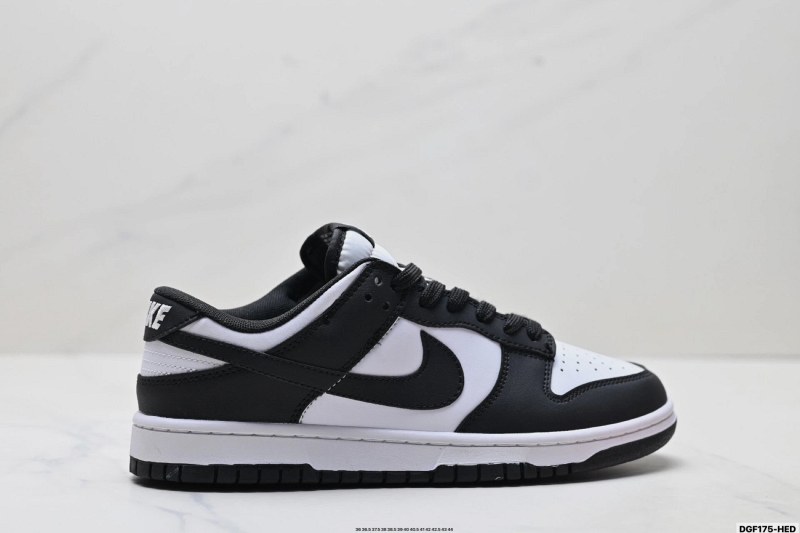
The black-and-white Dunk Low does not need an introduction, which is exactly why a $15.51 version deserves a close look rather than a lookbook. Our testing team ordered the pair through a shopping agent, logged it from payment to parcel, measured the shell flat, and then did something most sneaker reviews skip: we lifted the footbed and inspected what sits underneath it. What follows is a teardown-and-wear note, not a hype check.
What the listing states, and what it leaves open
The catalog entry names the Nike Dunk Low "Panda" Classic Series, style code DD1391-100, at $15.51 USD against a $16.48 comparison price, listed as in stock. The description is honest about the two-tone build: black Swoosh and overlays, white toe box and midfoot panels, perforated toe, black heel tab with white Nike branding, black outsole under a white midsole. Anyone who has handled the general-release shoe will recognise the parts list. The listing does not publish upper material, midsole composition, weight, or a size chart in centimetres, so those questions had to be answered on the bench and on foot.
Two size lines, one decision
The listing carries two separate size strings, and they do not match:
| Source in listing | Sizes shown |
|---|---|
| Primary size line | 36, 36.5, 37.5, 38, 38.5, 39, 40, 40.5, 41, 42, 42.5, 43, 44, 45 |
| Secondary spec line | 35, 36, 37, 38, 39, 40, 41, 42, 43, 44, 45 |
Only the first list includes half sizes, and only the second includes a 35. Before ordering, we confirmed the exact size in writing with the agent rather than trusting either line. Published Dunk Low sizing guidance leans true to size but repeatedly flags a narrow toe box as the most common complaint, with wide-footed buyers advised to go up half a size; some reviewers find the model roomier than an Air Max and would size down half a step instead. We ordered true to size and found the toe box the tightest part of the fit, with the heel locked and no lift.
Under the footbed: stitching, glue and the parts you cannot photograph
Lifting the insole is the fastest way to judge whether a cheap pair was assembled carelessly. Ours came out cleanly, revealing a flat, unbranded footbed board with no staple ends or loose thread tails underneath. Stitch density along the toe cap and the eyestay was even on both shoes, and the Swoosh on each side sat at the same height measured from the midsole line. Glue visible at the toe bumper was thin and consistently placed; the heel counter join on the right shoe was slightly heavier than the left, which is the kind of general-release inconsistency published Dunk Low guides warn about, and the reason we photograph both shoes in daylight before deciding.
Eyelets are the other common failure point on budget pairs. All of ours were seated flush, with no burred edges catching the laces during a week of repeated tying.
Firm foam, honestly assessed
The standard Dunk Low uses firm mid-1980s-style EVA with no Air unit, and guides describe it as fine for a few hours but sore over a full day. That matches our experience closely. On a five-day pattern of commuting, desk work and errands, the pair was comfortable through a morning and began to feel flat under the ball of the foot by late afternoon. There is no break-in miracle here; the leather upper softens a little, the midsole does not. Buyers who expect modern cushioning will be disappointed, and that is a design fact, not a defect of this particular listing.
Durability and the crease log
Durability for a casual lifestyle Dunk is rated relatively well in buyer-facing guides, around 8 out of 10 by one published assessment, which converts to 4 / 5 on our scale. After seven days we logged normal toe-box creasing, no sole separation, and no scuff that did not wipe away from the coated leather. The black-and-white colourway is also the most frequently cited best-seller in the Dunk Low line, so replacement pairs and matching accessories stay easy to find — useful when a cheap pair becomes a throw-on shoe.
What the $15.51 price actually changes
It changes the risk calculus, not the construction. Panda Dunks went from resale flips above $300 to sitting at or below retail after relentless restocks, so value now comes from buying cheaply and inspecting carefully rather than from scarcity. At this price a scuff, a rainy commute or a crease costs very little. What it does not buy is cushioning, premium leather, or a guaranteed consistent pair — so confirm your size, open the parcel in daylight, and check stitching, glue lines and panel alignment before you commit to wearing them.