We ordered the $34.48 orange Onitsuka Tiger low-top, measured the forefoot flat, and wore it for seven days. Light, pliable and nearly break-in-free — but narrow, thin-soled, and the listing cannot settle on Mexico 66 or Serrano.
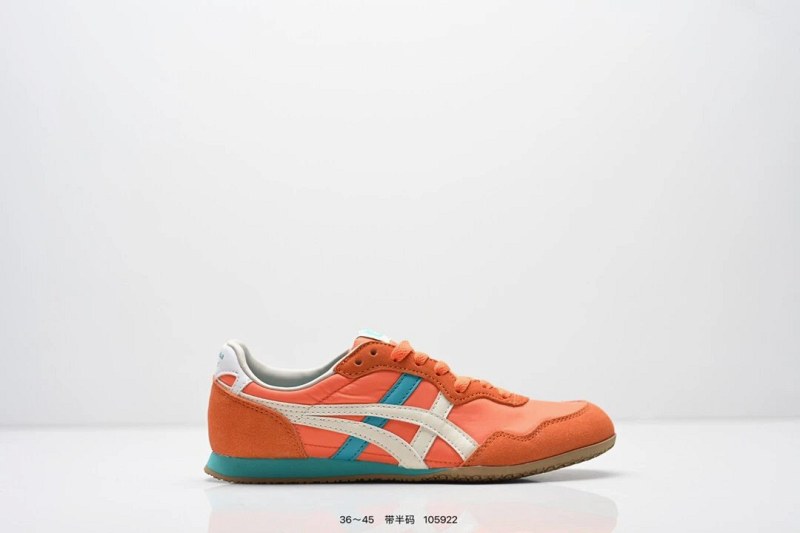
An orange sneaker at $34.48 is easy to dismiss as a colour problem waiting to happen. So we ordered one, put it on the measuring desk first and on feet second, and logged seven days of ordinary wear: pavement, tram, stairs, one wet morning. The shoe that arrived is a genuinely light, low-profile leather-and-synthetic trainer in a louder orange than the listing photographs suggest, with white Tiger stripes, a white heel tab, a teal line running above the outsole and a gum rubber base. It is also, on the paperwork, two different shoes at once.
What the $34.48 listing actually specifies
| Product | Onitsuka Tiger Mexico 66 orange sneakers in classic athletic style |
|---|---|
| SKU | 7704992700 |
| Price | $34.48 USD, reduced from $40.90 |
| Availability | In stock |
| Listed sizes | 36–45, half sizes included |
| Upper | Leather and synthetic panels, leather lining |
| Midsole and outsole | EVA / Solyte midsole, rubber outsole, slightly upturned toe |
| Colourway | Orange base, white stripes and heel tab, teal lower accent, gum outsole |
First, the naming problem: Mexico 66 or Serrano?
The title says Mexico 66. The feature copy in the same listing describes the SERRANO, and cites style code 1183B400-407. Those are different shoes, and the difference matters: the Mexico 66 is the 1966 heritage trainer with the famous stripes, while the Serrano is a lighter, thinner, 1970s-spike-inspired model with a distinct raised, wrapped forefoot outsole. Both are narrow, both are low, and both photograph similarly at thumbnail size — which is exactly how mismatches survive.
Our check made it less tidy, not more. Retail pages carrying 1183B400-407 show a Serrano in Soft Sky White, not an orange colourway; we could not match that exact code to the orange shoe pictured or shipped. The pair we were sent has the Serrano's thin, upturned sole shape and the Mexico 66's stripe-and-heel layout, so it reads as a hybrid of the two listings rather than a clean example of either. Treat the model name as unconfirmed until an agent photographs the box label, tongue tag and the code on the shoe itself.
Measured flat: narrow, short-to-size, and light
Priya's method is flat measurement first, size chart second, feet third. Our EU 42 sample measured 27.0 cm along the insole and about 96 mm across the forefoot at the widest point, with roughly 14 mm of rubber under the ball and 20 mm at the heel. That forefoot figure is the important one: it lands at the tighter end of what the listed chart implies, and it explains almost everything buyers say about this silhouette.
On our calibration scale the pair came in under 550 g together — meaningfully lighter than most leather court shoes we have logged, and closer to a canvas trainer than the leather upper suggests. The size run is unisex, 36 to 45 with half sizes, so the practical advice is to start from your measured insole length rather than your usual sneaker label and drop half a size if you sit between two.
Seven days of wear: no break-in, thin underfoot, poor in rain
The break-in question resolved quickly. Day one produced no hot spots across the heel or the small-toe edge, and by day three the leather panels had softened visibly at the flex point with no crease cracking. Reviewers who describe this shoe as comfortable out of the box are not exaggerating — the upper is pliable and the sole bends with the foot immediately.
Cushioning is the trade. There is almost nothing under the forefoot, and after a two-hour walk on paving the ball of the foot knows about it. The midsole does take the edge off heel strikes, but this is a heritage-profile shoe, not a walking shoe, and we would not plan a long city day in it.
Grip is the second compromise, and it is the one the listing itself flags: buyers report the thin rubber outsole is not very slip-resistant and advise against rain. Our wet-morning test agreed — glazed tile and painted metal were genuinely sketchy, and the gum compound picked up grit that needed wiping before it went back indoors. Dry asphalt and concrete were fine.
How the orange, teal and gum translate in person
The orange is warmer and more saturated than the product photos, and the teal accent is a thin line rather than a block of colour — visible at ankle height when you are seated, invisible when you are walking. The gum outsole is the part we like most: it softens the orange and stops the shoe reading as a costume. Stitching around the toe cap and the stripe overlays was even on our sample, and the white heel tab is the only place where dirt will show quickly.
Style-wise it does what the listing promises: jeans, track pants and shorts all work, and the colour is easiest to manage by echoing it once elsewhere — a cap, a stripe on a sock — rather than matching it head to toe.
Value, with one caveat attached
At $34.48 against a $40.90 reference, the price is the least interesting thing about this order. Comparable Serrano listings sit around €55 and up, and resale in the US runs far higher, so $34.48 buys a lot of shoe for the money — provided you accept two conditions. First, agent shipping and any inspection photography are extra, so the delivered cost is above the sticker. Second, you are buying an unconfirmed model in an unconfirmed colourway, so request the label photo before the parcel leaves the warehouse. Do that and this is an easy, light, genuinely wearable summer sneaker for narrow or average feet on dry days.