Black Track Suit: Reflective & Zipper Detail Review
By Marcus Feld Editor-in-Chief
| Published | |
|---|---|
| Updated |
The styling focus of a black track suit is to unify the visual with a dark base, then add layers with light-colored stripes and zipper details. When laying flat, the jacket and pants should maintain relatively complete structures, allowing the shoulder line, hood shape, waistband, and cuffs to be in frame simultaneously, making it easier for readers to judge the overall style and detail distribution. ## Color Relationships in the Image 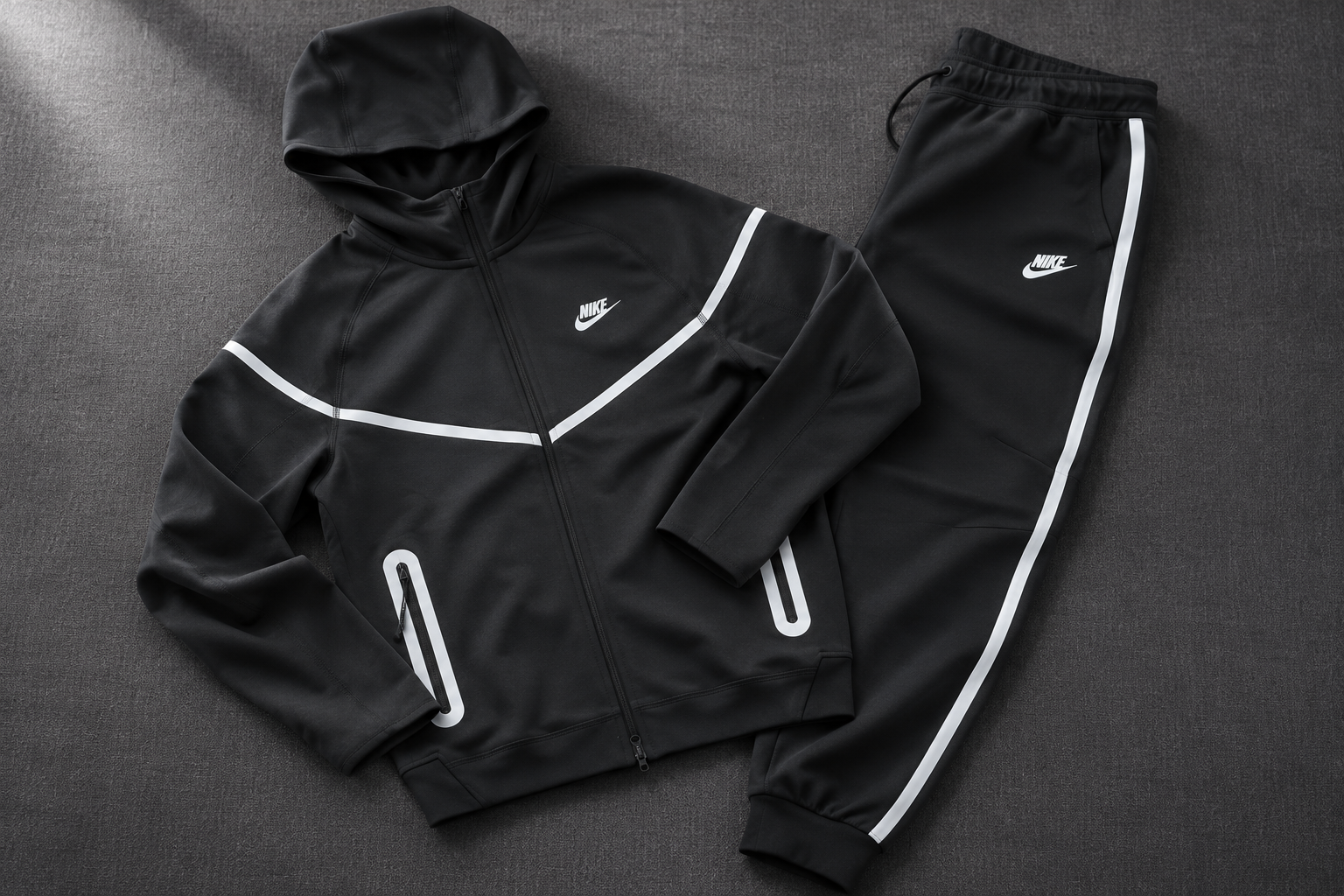
Editor score 4.2 / 5
The styling focus of a black track suit is to unify the visual with a dark base, then add layers with light-colored stripes and zipper details. When laying flat, the jacket and pants should maintain relatively complete structures, allowing the shoulder line, hood shape, waistband, and cuffs to be in frame simultaneously, making it easier for readers to judge the overall style and detail distribution.
Color Relationships in the Image

This outfit features black as the main color, with the jacket and pants forming a continuous dark base. The light curved decorative stripes on the chest, shoulders, and near the hem of the jacket, and the light side stripes on the pants, echo each other, maintaining a unified look between top and bottom. The light logos on the chest and pant sides also become small visual focal points without breaking the overall simplicity.
For styling, continue with low-saturation black, white, and gray. A white or light gray inner layer can echo the stripes, and black shoes can continue the suit's completeness; if you want more contrast, choose white soles or a light gray hat, but avoid too many accessory colors, as that would weaken the emphasis created by the stripes.
How Jacket Details Become Styling Focus
The jacket features a hood and zipper closure, with clear front lines. Light decorative stripes extend from the shoulder and chest areas, creating horizontal and diagonal visual guidance. Zippered pockets are visible near the cuffs, adding functional feel and metal details to the simple black body.
For display, it is recommended to slightly spread out the jacket, keep the zipper at the center of the frame, and let the hood lie naturally, avoiding the collar and hood brim overlapping. The sleeves can be spread downward or outward, but do not let the cuffs completely cover the pockets, so the sleeve shape, zipper position, and continuity of the decorative stripes are easier to see.
For everyday wear, the jacket can be paired with matching pants as a full suit, or worn separately with gray sweatpants or dark straight-leg pants. To add layers to the upper body, add a white or light gray short-sleeve inside the zip-up; for a sleeker look, opt for a dark inner layer without obvious patterns.
Display and Combination of Pants
The light side stripes on the pants extend from near the waist to the cuffs, echoing the jacket's decorative lines. The waistband has a drawstring structure, and the lower legs have a cuffed effect, with an overall sporty casual silhouette. In the image, the pant legs have slight natural stacking, so when displaying, you can moderately straighten the sides to make the stripe direction clearer.
When styling the pants alone, choose a black, white, or gray top. If using a loose top, it is recommended to keep the cuff silhouette to avoid excessive stacking at both top and bottom; if pairing with a cropped jacket, you can highlight the cuffed structure and side stripes, making the leg lines more concentrated.
Practical Tips for Flat-Lay Composition
- Determine the jacket as the main subject of the frame, then place the pants to the side-back or diagonally to create front-back layering.
- Keep key parts such as hood, zipper, pockets, waistband, and cuffs visible, avoiding clothes overlapping each other.
- Use the contrast between black clothing and a gray background to enhance silhouette recognition.
- Place light stripes in visible positions so the echoing relationship between top and bottom is clear at a glance.
- Folds can be kept in a natural state, but avoid large-scale stacking that covers seams and structure.
What to Observe When Choosing Styling
This flat-lay image is suitable for judging color scheme, decorative stripe direction, zipper position, hood shape, pocket design, waistband structure, and cuff silhouette. However, fabric composition, thickness, breathability, wearing comfort, fit, post-wash performance, durability, and specific model cannot be determined from the image alone. If these factors affect your purchase decision, check the product specifications, size information, and corresponding detail images separately.